|
|
|
|
||||||
 |
 |
|
|||||||
|
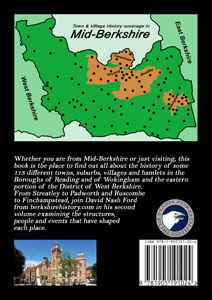
The parish is officially called St Nicholas Hurst, but is always simply called Hurst locally. The original settlement was at Whistley Green. However, in about 1080, the Abbot of Abingdon, who was lord of the manor, had a small wooden church built for the local people. The site chosen was a small previously wooded hill, just to the south, known as a Hurst: and the name stuck. The church was dedicated to St Nicholas by St Osmund, the Bishop of Salisbury. It was not a parish church, however, but a chapel-of-ease to the mother church at Sonning, out of whose region Hurst parish was later carved. In 1220, the Dean of Salisbury made one of his regular visitations to Sonning and insisted on interviewing the curates from the surrounding chapels. The credentials of Richard of Hurst were found to be highly suspect and he was suspended. The junction of Hogmoor Lane with Broadwater Lane is known as Warde's Cross. This reminds us of Richard Warde (originally from Winkfield), Henry VIII's sub-treasurer who was given the main Hurst manor at the Reformation. The Abbot's steward had only ever had a small house in Whistley, but Warde built himself the large Hurst House, near the church, in about 1545. Unfortunately, it was totally reconstructed in 1847, although the builders did reuse the old materials. Richard Warde has a fine family monument and brass (1577) in Hurst Church. Alongside him, lie many other local dignitaries, commemorated by a wide array of elegant monuments. His daughter, Alice Harrison, has a brass depicting her in childbirth during which she died in 1558. Lady Savile, the mother-in-law of Alice's grandson, Richard Harrison, who retired to Hurst, has a vast draped monument with kneeling figures of various family members (1631) including her last husband, Sir Henry Savile. He was the Warden of Merton College, Oxford, and Provost of Eton, who helped translate the King James Bible. There is a chunky wall monument (1683) to Richard's son (and namesake) and his wife. Then there is Henry Barker of Hurst Lodge, who has a recumbent effigy with a finely carved figure of skeletal death kneeling at his feet (1651). The Barkers were patrons of the almshouses built opposite the church in 1664. Next to the church is the Castle Inn. The so-called Coffin Room within was where bodies would be laid out while awaiting burial, as it was originally a 'church-house' where the clergy sold ale to raise ecclesiastical funds. The bowling green adjoining the pub is the oldest in the county. King Charles I is said to have played on it. He may have been visiting his Secretary of State, Sir Francis Windebank, at Haines Hill on the northern edge of Broad Common. His high position at court had been obtained for him through the influence of his great friend and the King's right-hand man, Reading-born Archbishop Laud. His Grace often visited Hurst and sometimes preached in the parish church. The Harrisons, like Windebank, were also Royalists during the Civil War and spent most of their fortune raising three troops of horse for the King. However, as they were away fighting most of the time, a small party of parliamentarians was able to station itself in the village. In 1643, there was an armed skirmish when some of the royalist garrison at Reading rode out to attack them, but the Roundheads were eventually triumphant. Read more history of Hurst and other nearby settlements, like Whistley Green, in David Nash Ford's book, 'Mid-Berkshire Town and Village Histories'. Click to Order direct from the Author.
|
|
|||||||
| © Nash Ford Publishing 2001; Revised 2020. All Rights Reserved. | |
||||||||



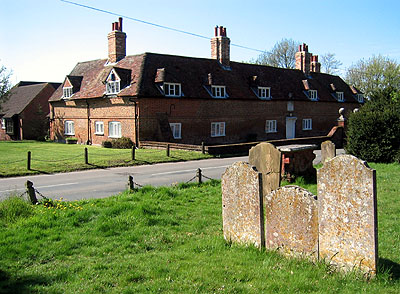 Hurst
Hurst